
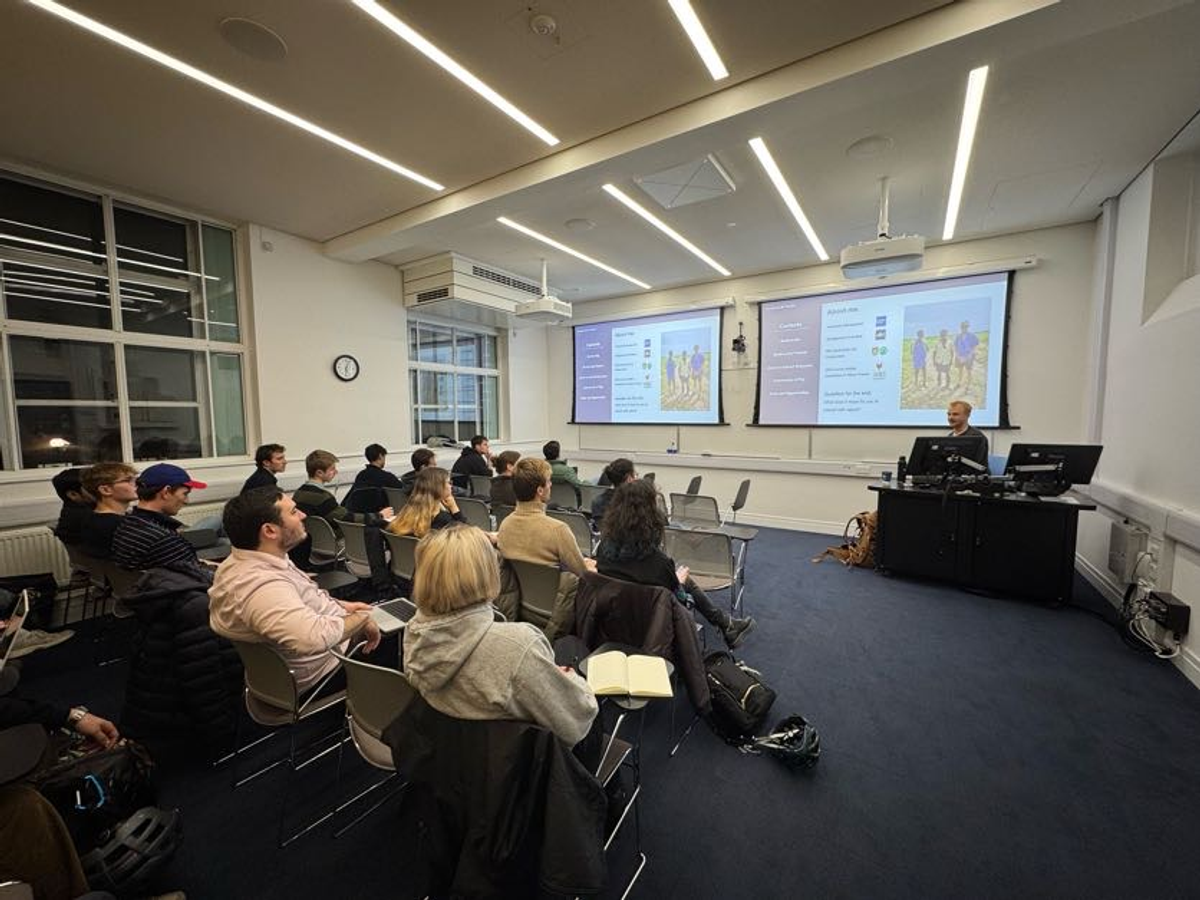
On October 28, the Oxford Sustainable Finance Student Society hosted researcher Harrison Carter from Wildlife Conservation Research Unit (WildCRU) and the Interdisciplinary Centre for Conservation Science (ICCS) at the University of Oxford.
Financing Models for Nature
Carter opened by addressing the funding shortfall for nature-positive initiatives. He explained that "conventional philanthropic channels are insufficient to meet biodiversity and ecosystem funding needs." The presentation then explored alternative financial approaches including debt instruments, nature-linked bonds, credit mechanisms, and conservation-tailored structured finance.
Sustainable Financial Instruments & Direct vs Indirect Impact
Carter presented key instruments such as nature-credits, futures contracts, swap mechanisms, and hedging tools. He differentiated between indirect impact—financing broader ecosystem risk mitigation—and direct impact, which funds restoration or human-wildlife coexistence initiatives. He stressed that proper structuring matters significantly, warning that without credible metrics and aligned incentives, instruments risk becoming superficial rather than creating meaningful change.
Emerging Research: Hedging Techniques & Market Creation
Current research explores how hedging strategies might establish dependable demand for nature-linked instruments. A central challenge involves building robust markets through futures, derivatives, and insurance mechanisms while ensuring credible investor and corporate participation.
Community Translation: From Finance Jargon to Field Action
A critical theme was translating complex financial terminology so that farmers, pastoralists, and conservation communities understand and trust these mechanisms. Carter emphasized that communities must function as active participants, not passive beneficiaries.
The session concluded with audience discussion addressing biodiversity credit credibility, outcome-based contract feasibility, and investor-ecology alignment concerns.